Introduction
The manufacturing landscape is undergoing a seismic shift. No longer confined to passive data collection, factories are evolving into autonomous, AI-driven ecosystems capable of real-time decision-making. Yet, as Elia Brunelli, Technical Solution Manager at ALTEN Italy, highlights, the true challenge lies not in technological prowess alone, but in bridging the gap between innovation and practical deployment.
"Technology enables. Usability delivers."
This article explores how ALTEN is tackling the core obstacles such as legacy infrastructure, data quality, and skills gaps, to transform proof-of-concepts into scalable, human-centric solutions.
What is the biggest paradigm shift in manufacturing today?
The most profound transformation is the move from reactive monitoring to autonomous, AI-driven decision-making. Factories are no longer just collecting data; they’re deploying systems that detect anomalies, correct processes, and log interventions. This isn’t just an upgrade; it’s a fundamental rethinking of how production lines operate.
For example, predictive maintenance was once seen as the ultimate goal. Today, it’s merely the starting point. The real breakthrough is creating systems that don’t just predict failures but autonomously resolve them, turning data into actionable clarity for operators.
Why do so many industries struggle to scale these innovations?
Three critical blockers persist: legacy infrastructure, data quality, and human expertise.
First legacy systems, many plants still rely on 20-year-old PLCs never designed for cloud integration. Retrofitting them without halting production is costly and complex.
Second data quality, AI is only as effective as the data it consumes. Most plants have partial, inconsistent, or poorly labelled sensor data, creating a bottleneck for AI adoption.
Finally people, deploying a model is straightforward but empowering technicians to master it is not. Currently, 60% of manufacturing tech potential remains untapped because the complexity exceeds operators’ skills. At ALTEN, we focus on designing solutions for the end user, not just the engineers who build them.
How does ALTEN address these challenges?
We prioritise human-centric design. For instance, in cobot orchestration projects, we built connected assembly lines where operators monitor and configure systems without needing to understand the underlying AI.
Similarly, our IoT-based anomaly detection solutions process machine signals in real time, translating complex data into simple, decision-ready insights. The shift isn’t just from reactive to predictive maintenance; it’s from confusion to clarity.
What technologies are unlocking these advancements?
The convergence of edge computing, digital twins, and large language models is key. Edge computing is now affordable, digital twins have matured, and LLMs bridge the gap between operational systems and human operators. None of these are new, but their simultaneous readiness is revolutionary.
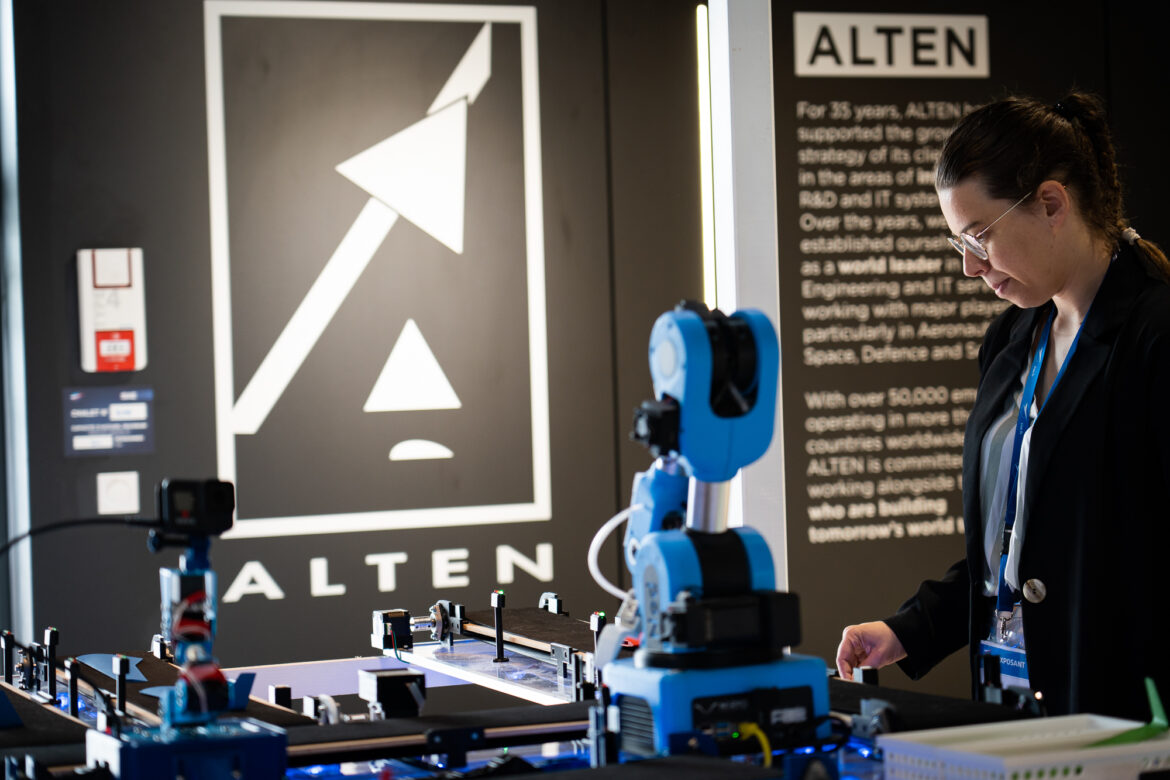
For example, our "Mini Plant 4.0" combines a drone assembly line with a digital twin, allowing clients to simulate and optimise processes before deployment. This isn’t just innovation, it’s practical and scalable transformation.
What skills will define the future of manufacturing?
Technical literacy and domain knowledge remain vital, but soft skills such as creativity, collaboration, resilience are the differentiators. In hybrid environments where humans and autonomous systems coexist, these skills enable adaptation, innovation, and leadership.
At ALTEN, we’re committed to upskilling teams to navigate this transition, ensuring technology serves people.
About expert

Elia Brunelli - Technical Solution Manager at ALTEN Italy
Elia Brunelli, leads the charge in transforming manufacturing through AI-driven, human-centric solutions. With expertise in Industry 5.0, he tackles challenges like legacy systems and skills gaps, ensuring technology is both innovative and practical. His projects, such as "Mini Plant 4.0," demonstrate how cobots, IoT, and digital twins can revolutionise production while empowering operators. Elia champions upskilling and collaboration, making advanced manufacturing accessible and effective.













 CN
CN